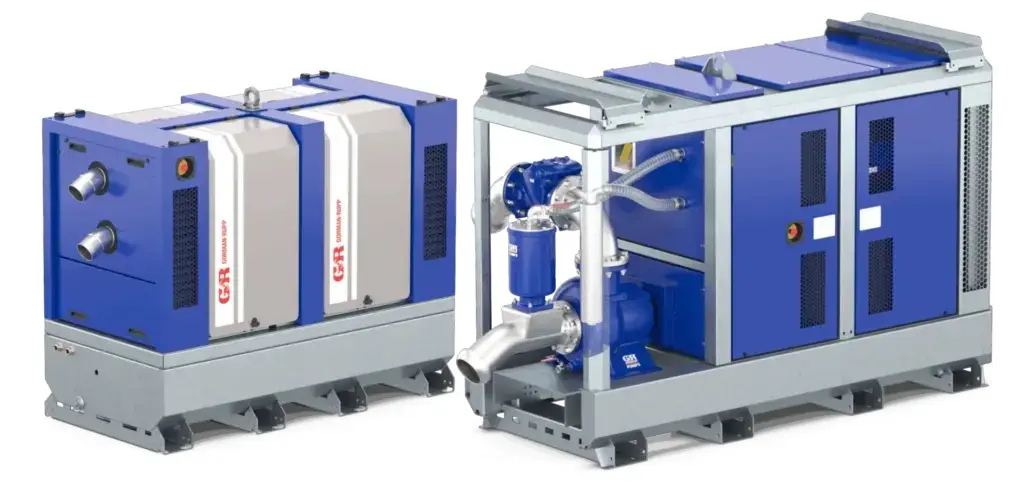


Selecting the right mobile pump set is an engineering exercise, not a catalogue exercise. The wrong choice means underperformance, premature wear, fuel waste or, worse, downtime on a critical project. The right choice starts with the application and works back to the configuration. This guide walks through the four steps our application engineers use, plus the most common selection mistakes to avoid.
Step 1: Define the application and the medium
Start by describing what you are pumping and why. Is it clean groundwater from well-point dewatering, dirty rainwater with sand and silt, raw sewage, slurry from HDD operations or process water inside a factory? The medium determines the pump platform: clean and lightly contaminated water is well served by self-priming centrifugal pumps with high-efficiency multi-vane impellers; dirty water and sewage need solids handling capability and clog resistance; very abrasive media may require hardened materials and a specific hydraulic design.
Step 2: Calculate flow and total dynamic head
Flow and total dynamic head (TDH) are the two anchors of the duty point. Flow is expressed in m³/h or l/s and is set by inflow rate, project deadlines or process requirements. TDH combines static lift, friction losses in suction and discharge piping, fittings and the discharge pressure required at the outlet. Underestimating friction loss is the most frequent calculation error in field practice. As a rule of thumb, oversize TDH calculation by 10 to 15 percent to absorb variation in pipe condition and fitting layout.
Step 3: Select the drive
With application and duty point fixed, the drive choice becomes practical. Diesel for autonomy and remote sites; electric for urban work, low noise and zero on-site emissions; petrol or battery drive for small portable units. For most B2B projects in Europe today, the choice is between Stage V diesel and electric with VFD. See our diesel vs electric comparison for an in-depth treatment.
Step 4: Select mobility, accessories and controls
Trailer-mounted for road transport between sites. Skid-mounted for one-location duty. Sound-attenuated enclosure for night work and noise-sensitive areas. Add level control for unattended operation, remote monitoring, larger fuel tanks for extended runtime, and the appropriate suction and discharge fittings.
Avoid these common selection mistakes
- Sizing for headline flow without checking TDH at that flow point.
- Forgetting to validate suction lift against NPSH available; cavitation (which consists of vapor bubbles, not air bubbles, that implode and damage the pump) is the consequence of getting this wrong.
- Choosing a pump platform without solids handling capability for a dirty water duty.
- Underestimating the noise constraints at night.
- Not specifying fuel autonomy for unattended runs.
A short worked example
Project: dewater a 4,000 m² building pit, expected inflow 80 m³/h, lift 6 m, 200 m of 6″ lay-flat hose to discharge, urban site, 12-week duty, daytime work only.
Approach: 80 m³/h at TDH around 12 m gives a comfortable working point on a Super T-Series 4″ or 6″. Urban site with daytime work and grid power available means E-Line is preferred for noise and emissions. With 12 weeks of duty, owning is borderline; rental likely wins on TCO unless the customer has follow-on projects.
Want to check the duty point for your own project? Use our G.R.A.S.P. pump selector or ask our application engineers for advice.